How UCS Delivers Office Deep Cleaning Services [Checklist Included]

Introduction

In a busy Bay Area office, foot traffic never stops. Employees, clients, and visitors constantly move through the space, bringing in dust, dirt, and germs. Daily cleaning handles the surface mess, but it’s deep cleaning that keeps your workplace truly healthy, safe, and professional.

Studies show that workplace cleanliness directly impacts productivity. According to a survey by the American Cleaning Institute, over 90% of employees believe that a clean workspace improves focus and reduces stress. On the flip side, poor cleaning practices contribute to sick days, low morale, and even lost business opportunities when clients walk into a dirty environment.

That’s where UCS comes in. In this guide, we’ll show you how UCS approaches deep cleaning differently, why it matters, and provide a complete office deep cleaning checklist that you can put into action immediately.

What is Office Deep Cleaning Services and Why It Matters

Daily or weekly cleaning routines are necessary but limited — trash bins get emptied, desks get wiped, and floors get mopped. Deep cleaning, however, is a more intensive process that targets hidden dirt, bacteria, and allergens that accumulate in less obvious places.

The benefits are clear:

  • Healthier workspaces: Deep cleaning reduces germs, allergens, and indoor pollutants, cutting down on sick leave. The CDC notes that proper cleaning and disinfection can reduce illness-related absenteeism by up to 40%.
  • Longer asset life: Carpets, furniture, and flooring last longer with regular deep cleaning.
  • Professional image: Clients notice first impressions. A spotless lobby or conference room builds trust instantly.
  • Safety: Slips, mold, and pest issues often stem from overlooked deep cleaning tasks.

Skipping deep cleaning isn’t just a maintenance issue, it’s a business risk.

How UCS Delivers Deep Cleaning Differently

Many companies treat deep cleaning as a box-ticking exercise. UCS takes a different approach.

Here’s what makes UCS unique in the Bay Area:

  • Customized cleaning plans: Every office layout and industry has different needs. UCS tailors deep cleaning schedules based on space, foot traffic, and employee routines.
  • Highly trained teams: UCS staff are certified, insured, and trained to handle sensitive office areas, from high-tech equipment to medical offices.
  • Eco-friendly practices: We use green-certified, non-toxic products to protect your employees and the environment — without compromising on results.
  • Advanced tools: Industrial-grade vacuums, carpet extractors, and steam cleaners that outperform standard janitorial equipment.
  • Accountability: Regular audits, supervisor inspections, and transparent reporting make sure every task is completed thoroughly.

This combination of flexibility, professionalism, and sustainability makes UCS a trusted commercial cleaning partner for Bay Area businesses.

Preparing for a Deep Clean

Before deep cleaning begins, UCS helps offices prepare to minimize disruption:

  • Decluttering desks, storage areas, and communal spaces.
  • Identifying high-traffic and sensitive areas (server rooms, reception).
  • Sharing cleaning schedules with employees to avoid downtime.

By organizing in advance, UCS ensures the cleaning process is efficient and effective.

Tools and Products UCS Uses

Deep cleaning requires more than just brooms and sprays. UCS equips its teams with:

  • Industrial-grade vacuums that capture fine dust and allergens.
  • Steam cleaners and extractors for carpets and upholstery.
  • Non-toxic disinfectants that are tough on germs but safe for everyday office use.
  • Specialized equipment for windows, vents, and hard-to-reach areas.

The result is a cleaner office that’s healthier for everyone who steps inside.

UCS Office Deep Cleaning Checklist

Here’s a comprehensive checklist covering every part of the office:

Restrooms

  • Scrub and disinfect toilets, urinals, and sinks.
  • Deep clean tiles, grout, and partitions.
  • Polish mirrors, chrome fixtures, and dispensers.
  • Empty and sanitize trash bins.
  • Restock supplies and replace liners.

Kitchen & Break Room

  • Clean inside refrigerators, microwaves, and coffee machines.
  • Sanitize countertops, sinks, and cabinets.
  • Wipe chairs, tables, and handles.
  • Remove odors and disinfect trash cans.

Workstations & Cubicles

  • Wipe and sanitize desks, keyboards, phones, and monitors.
  • Dust shelves, blinds, vents, and light fixtures.
  • Move and clean under/behind furniture.
  • Spot clean walls, doors, and glass partitions.

Floors & Carpets

  • Vacuum and remove stains.
  • Shampoo carpets for deep dirt removal.
  • Strip, wax, and polish hard floors.
  • Clean and seal grout lines on tile floors.

Windows & Glass

  • Wash interior and exterior glass.
  • Wipe partitions and door panels.
  • Remove cobwebs from corners and ceilings.
  • Dust ducts and vents.

Reception & Common Areas

  • Disinfect furniture, rugs, and decorative items.
  • Clean reception desks, coffee tables, and seating.
  • Sanitize entry handles, switches, and access keypads.

Polish entrance mats and lobby floors.

Frequency Guide: Daily, Weekly, Monthly, and Annual Tasks

Not every deep cleaning task happens daily. UCS organizes cleaning into smart schedules:

  • Daily: Empty trash, sanitize restrooms, disinfect high-touch areas.
  • Weekly: Vacuum carpets, dust furniture, wipe appliances.
  • Monthly: Clean appliance interiors, sanitize break room storage.
  • Quarterly/Annual: Full carpet shampooing, floor stripping and waxing, exterior window washing, upholstery cleaning.

By structuring tasks this way, UCS prevents buildup while keeping costs predictable.
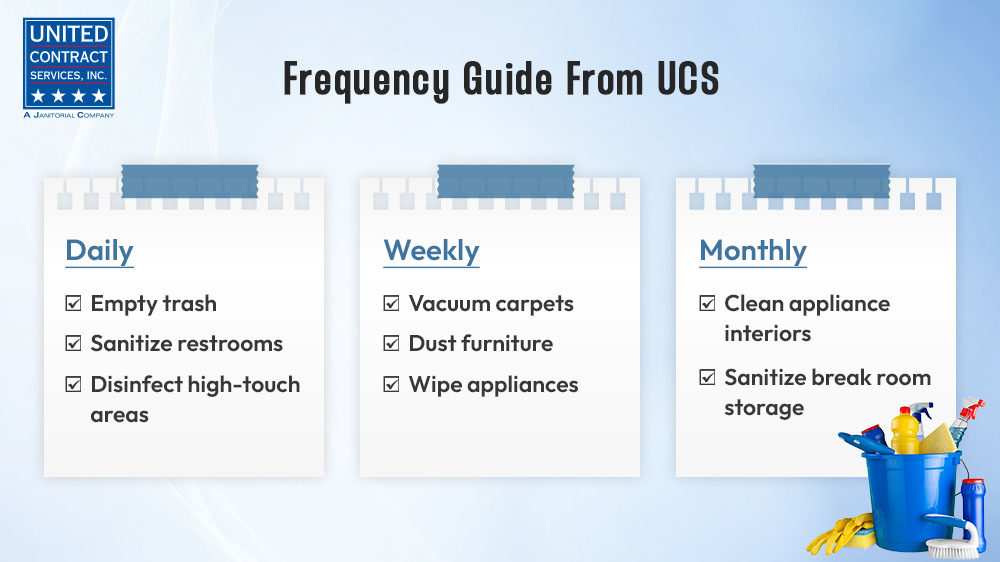
UCS Provide deep cleaning frequency for offices

Health, Safety, and Sustainability

Clean offices aren’t just about appearances — they’re about protecting people.

  • Green cleaning: UCS uses eco-friendly supplies that reduce exposure to harsh chemicals.
  • Air quality focus: Dusting vents and using HEPA vacuums improves indoor air, which research shows can improve productivity by up to 11%.
  • Compliance: All staff follow OSHA safety standards to protect employees and visitors during the process.

Your office feels fresh, smells clean, and stays safe.

Quality Control: The UCS Guarantee

Many commercial cleaning companies cut corners. UCS prevents that with strict quality control:

  • Supervisor inspections after deep cleaning sessions.
  • Detailed checklists with sign-offs for every task.
  • Client feedback loops to continuously improve services.

This level of accountability is why Bay Area businesses repeatedly trust UCS with their workplaces.

Final Thoughts

Deep cleaning isn’t optional; it’s essential for maintaining productivity, promoting health, and enhancing brand image. The real question isn’t whether you should invest in it, but who you trust to do it right.

With UCS, you get more than a checklist. You get a partner who delivers spotless offices, healthier workplaces, and long-lasting results every single time.

book a consultation to see how we can transform your Bay Area office.

UCS Ultimate Office Deep-Clean Blueprint: Boost Hygiene, Productivity & Peace of Mind

A clean office is more than just a visually appealing space—it is a strategic asset that directly impacts employee health, productivity, and morale. 

While regular cleaning addresses visible messes, office deep cleaning services target the hidden dust, germs, and allergens that standard routines often miss. 

In today’s competitive and health-conscious business environment, a robust deep-cleaning strategy is essential for maintaining a safe, efficient, and welcoming workplace.

What Makes Deep Cleaning Different?

Professional deep cleaning services offer a comprehensive process that goes far beyond surface-level tidying. It systematically eliminates contaminants from hard-to-reach and often-overlooked areas, creating a truly hygienic environment.

Key Benefits:

  • Boosts Employee Morale & Productivity: An impressive 91% of employees report that a clean office environment positively impacts their morale and productivity. In fact, research shows that workplace cleanliness can directly enhance productivity by up to 15%, primarily by reducing absenteeism and stress.
  • Reduces Sick Days & Allergies: Offices that are regularly deep cleaned and sanitized experience significantly fewer incidents of flu, colds, and allergies, leading to fewer sick days and better overall employee health. Companies that promote regular hand hygiene and cleaning have seen a 30–40% drop in sick-related absenteeism.
  • Improves Indoor Air Quality: Deep cleaning removes dust, mold, and allergens from carpets, vents, and upholstery, which is crucial since poor indoor air quality is linked to cognitive decline and increased irritability among employees.
  • Extends Asset Lifespan: Office deep cleaning services help extend the life of carpets, furniture, and office equipment, reducing long-term replacement and maintenance costs.
  • Enhances Safety & Reputation: A cleaner office is a safer office, reducing slip, trip, and contamination risks. Notably, 72% of employees are reluctant to recommend businesses with poor hygiene, highlighting the impact of cleaning quality on recruitment and reputation.

Step 1: Evaluate & Plan Your Space

Before launching a commercial deep cleaning services initiative, it’s essential to analyze your office environment and tailor your approach:

  • High-Traffic Zones: Entrances, lobbies, and breakrooms are hotspots for germs. Research shows that office desks can harbor more than 400 times the amount of bacteria found on a typical toilet seat—over 10 million bacteria per desk
  • Workstation Density: Open-plan offices require more frequent cleaning due to higher density and shared surfaces.
  • Shared Amenities: Restrooms, kitchens, and meeting rooms are critical areas for office deep cleaning services, as nearly 1 in 5 employees refuse to use office restrooms due to poor hygiene.
  • Neglected Spots: Vents, blinds, baseboards, and ceiling corners often accumulate dust and allergens, impacting air quality and employee health.
  • Scheduling: To minimize disruption, schedule local deep cleaning services during off-hours or weekends. This also allows cleaning staff to work more efficiently and safely.

Step 2: Build Your Cleaning Checklist

A structured, tiered checklist ensures consistency and thoroughness. Here’s a data-backed approach:

Daily Must-Dos
  • Empty bins and sanitize handles: Reduces germ spread and odors.
  • Mop floors and vacuum common areas: Maintains cleanliness and air quality.
  • Wipe and disinfect desks, phones, and shared equipment: 94% of workers feel more productive in a clean workspace.
  • Clean restrooms and kitchens thoroughly: Prevents the spread of illness and improves employee satisfaction.
Weekly Deep Tasks
  • Clean glass doors, mirrors, and partitions: Enhances appearance and hygiene.
  • Sanitize doorknobs, switches, and reception counters: Regular disinfecting of high-touch surfaces can lower the incidence of respiratory illnesses and cold/flu cases, reducing lost workdays.
  • Vacuum upholstery and carpets: Removes allergens and dust mites.
  • Check and clean HVAC filters: Essential for maintaining air quality and reducing allergies.
Monthly/Quarterly Deep Dive
  • Dust light fixtures, vents, and ceiling corners: Prevents dust buildup and improves lighting.
  • Wash blinds, curtains, and windows: Reduces allergens and enhances natural light.
  • Deep-clean carpets and polish floors: Extends asset life and improves appearance.
  • Sanitize baseboards and hard-to-reach spots: Ensures no area is overlooked.

Step 3: Execute with Excellence

Execution is where your plan becomes reality. Focus on:

  • Tools & Products: Use microfiber cloths (which trap more dirt and bacteria), eco-friendly disinfectants, and carpet cleaners. Switching to green cleaning products can decrease headaches, respiratory irritation, and skin sensitivities, especially among those with asthma or allergies.
  • People: Decide between in-house teams or professional cleaning services. Professional services often bring specialized equipment and up-to-date training.
  • Accountability: Assign clear responsibilities and track completion using digital checklists or cleaning logs. Offices using digital logs and employee feedback report higher consistency and faster response to hygiene issues.

Step 4: Monitor, Improve, Repeat

Deep cleaning is not a one-time event, it’s an ongoing process:

  • Track Progress: Use cleaning logs or digital checklists to ensure tasks are completed and standards are met.
  • Gather Feedback: Regularly solicit employee feedback to identify overlooked areas and improve satisfaction.
  • Adjust Frequency: As your office grows or seasons change, adjust cleaning schedules to match new needs.
  • Measure Impact: Cleaner office environments lead to fewer sick days, reducing absenteeism and operational disruptions.

Before adopting these pro tips, make sure you’re not repeating common office cleaning mistakes, read our guide here.

Bonus: Pro Tips for Lasting Cleanliness

  • Enforce a Clear Desk Policy: Less clutter means faster, more effective cleaning and reduces stress, increasing focus.
  • Schedule Regular HVAC Maintenance: Regular checks and filter replacements boost air quality, which is directly linked to better cognitive outcomes and mood.
  • Encourage Personal Responsibility: Motivate staff to keep personal spaces tidy and provide disinfectant wipes and hand sanitizers for daily use.
  • Adopt Eco-Friendly Practices: Use certified green cleaning products (EPA Safer Choice, Green Seal, EcoLogo) and microfiber tools to reduce environmental impact and improve indoor air quality.
  • Leverage Technology: Consider IoT-enabled cleaning equipment and digital tracking for data-driven improvements.

Want to make deep cleaning services easy and effective? UCS can help. Download our ready-to-use Office Deep-Clean Checklist and schedule your workplace assessment today. Companies using structured tools and specialized deep cleaning services see measurable improvements in cleaning consistency, employee satisfaction, and workplace health metrics.

Final Thought

A clean office isn’t just about appearances. It’s about healthier employees, higher productivity, and peace of mind knowing your workplace is truly safe. 

By investing in a comprehensive deep-cleaning strategy, you’re investing in your people, your brand, and your bottom line.

Start with the UCS Ultimate Office Deep-Clean Blueprint and experience the difference a truly clean workplace can make.